If you want to be successful, you need to eliminate interruptions at work as much as possible.
When I worked as an NBA executive, my colleagues and clients loved to talk sports. Clients would call all the time to discuss the latest trade rumor or injury, and colleagues would drop by each other’s workspaces to do the same. This definitely made work fun. There are not many jobs where this type of activity can actually be considered part of your job. However, this perk also made it very hard to get anything done some times.
As a salesperson who earned a living by being productive, this was not an option for me. I needed to be very deliberate with how I used my time. However, I also didn’t want to be a jerk and tell people to stop bothering me. So, I developed some strategies around this. Here are 5 subtle ways that you can prevent people from interrupting you at work as well:
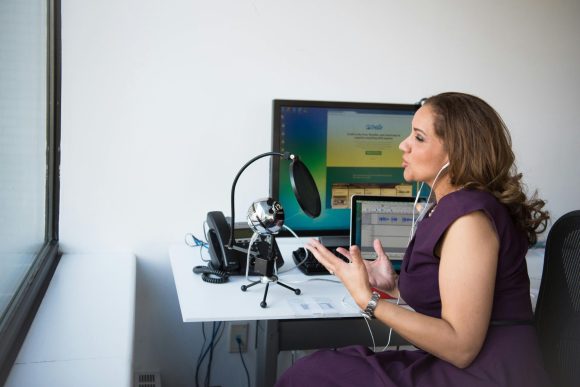
1. Wear headphones or a headset. You don’t even need to listen to music. Having headphones on will make colleagues much less likely to bother you with unimportant conversations. In a prior sales job, I kept my headset on virtually all day. It wasn’t because I wanted to be ready to pick up the phone whenever anyone called (see #2 below). Instead, I wanted colleagues to think I was on the phone, so that they wouldn’t interrupt me when I was busy. As a result, they rarely did.
2. Don’t answer the phone unless you are expecting a call. There are very few jobs that truly require you to answer the phone whenever someone calls you unexpectedly. Note: Your job is probably not one of those jobs! So, instead of allowing yourself to be interrupted whenever anyone calls you, allow unexpected calls to go to voicemail. (Unexpected calls from bosses or important customers are exceptions.) Then, return calls every few hours at one time.
3. Return voicemails by email, if possible. If someone leaves you a message about something that does not require a return call, just send an email as your reply.
4. Say that you “only have a few minutes.” One of my favorite clients in the NBA was a man I’ll call Jim. He was a former college athlete, a very knowledgeable sports fan, and an all-around great guy. However, he was also a lawyer, so he could talk for hours! Whenever this guy got on a roll, it was impossible to get him off the phone for at least 30-60 minutes. So, whenever I had to call him, I’d start each call by saying something like “Jim, I have to head to a meeting in a few minutes, but I wanted to call you real quick about —.” With this approach, I was able to cut many of our calls down to 1-2 minutes.
5. Deflect “drop-ins.” When someone drops by your workspace unexpectedly, stand up and excuse yourself. Yes, stand up. Then,say something along the lines of “Hey, what’s up? I was just about to —— (i.e. “grab a quick drink of water,” “use the bathroom,” “see if a fax came in for me,” etc.) If the person actually has something important to say, you can then sit back down and listen. If not, use their interruption as an excuse to take a 60-second break, grab some water, and then get back to work. This works really well for people who are stopping by just to avoid doing work. They usually get the hint after you do this a few times.
To be clear, I’m obviously not advocating that you try to eliminate all conversations with clients or colleagues. However, it’s easy to waste an entire day on small-talk or other unproductive time-wasters like Facebook, Twitter, g-chat, and so on. If you want to be successful, you should be the one in control of your time as much as possible.
Author:
Pete Leibman is the Author of the new book titled “I Got My Dream Job and So Can You” (AMACOM, 2012). His career advice has been featured on Fox, CBS, and CNN, and he is a popular Keynote Speaker at career events for college students and at conferences for people who work with college students.