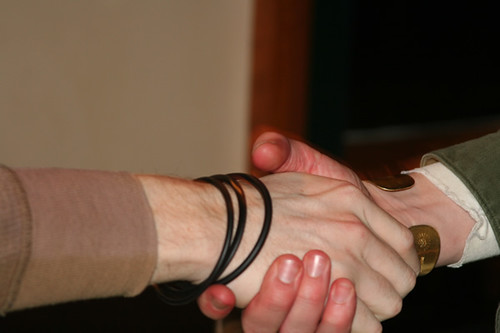
All great brands prefer making a first good impression. It just makes everything else that follows so much easier. What’s more, it’s a smart strategy. Take that handshake of yours, for example. It’s part of your personal brand’s body language. Not unlike your fingerprint, your handshake is unique, highly individualistic and without question, will make an impression on your interviewer, one way or another.
Your shake, walk, eye contact and talk
 The way you walk into the interview also makes an important impression. Ditto your attitude, the tone of your voice. It’s even the way you’ve picked the typography for your resume, and the way you’ve put together your portfolio. All these factors add up which is the reason why some people land the top jobs, and others don’t. Master these first impressions, and you’ll find yourself landing that top job too, or getting promoted. This is about those subtle yet significant clues you’re communicating – whether you know it or not.
So when’s the last time you thought about the impression your handshake makes?
In full disclosure, I love interviewing people. I find it highly personal, intriguing and engaging because it’s the invisible clues that alert me and inform me. I’m fascinated by people, and of course, what makes them tick. Dubbed Master Interpreter of Clues, I can spot the invisible clues, and a handshake clearly has a story to tell – and it’s all about you.
Your handshake is a Dead Give Away. Think long and hard about this one. Typically, you shake the interviewer’s hand before you even get to sit down in the meeting, right? This is critical because your handshake is telling a distinct story about your attitude and the way you feel the minute you walk through that door.
Imagine this Scenario: You’re aware that your handshake can make a good first impression so it’s firm, friendly. You have good eye contact when you’re shaking hands and you feel relaxed. You look relaxed. So far so good.
What do the Clues Tell? Clearly you know the difference between shaking the hand too hard or not hard enough. Good eye contact communicates confidence and a clear, relaxed state of mind. You get full marks.
Scenario B: You’ve never been so nervous. You certainly want to be at your best in this interview but you’re not really aware of the impact your handshake can even have on the interviewer. You were running late so you’re also feeling flustered, more anxious than usual and feel you need to be overly apologetic. (Not a good sign.)
What do the Clues Tell? It’s not a great start if your handshake feels like you’re placing a damp fish in the interviewer’s hand. First of all, it’s not a good feeling. It communicates loud and clear that (i) your self awareness and/or understanding about body language is not up to scratch; (ii) there’s a lack of confidence in the handshake indicating an immaturity, perhaps, which is not a positive sign for any serious job openings; (iii) you’ve never been told the truth about your limp handshake.
Footnote: Speaking generally, I’d have to admit that most females need to work on their handshake. (Sorry, it’s true.)
Take this handshake business seriously. It could just make the difference between landing the job of your dreams. (Or not.)
Author:
Mary van de Wiel is best known for her global expertise when it comes to coaxing out the real power in brands to dramatically increase sales. Van is founder and Creative Director of ZingYourBrand.com. She is the author of soon-to-be-published Dead Brand Walking: A Brand Therapist’s Viewpoint. Follow her on Twitter