Overview of the marketing list phenomenon
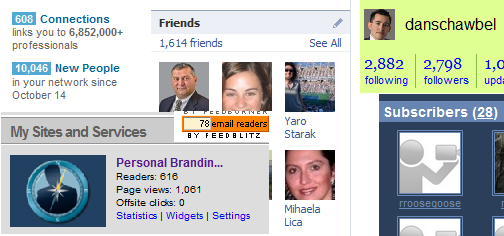
I’ve been thinking a lot of how web 2.0 has given way to mass, yet niche, marketing. If you are in this space, then you might want to take a second look at the communities you’ve joined, your blog and other social tools that you’re currently using. To me, what has started off as a social culture is slowly leading into a web marketing machine. Everything, from your Facebook “friends” to your LinkedIn network and even your Twitter followers is now considered a list. Yes, I know, this might sound terrible, but really, it’s a major opportunity.
As a brand, you need to be your own Chief Marketing Officer. This means, that even though you produce content, you have to market it and that’s the hardest part. You must look at all of your online affiliations as lists that you can freely market yourself to. Every time you update your Facebook status, you are sending a marketing message and a reminder to everyone that you are still alive (consistently reminding them of your personal brand).
Please take my first poll 🙂
Matt Mullenweg and his team at Automatic have purchased Polldaddy, which is an embeddable poll widget for websites. This means that your Wordpress.com blog’s post editor has the capability to add a sleek poll very easily. If he have a Wordpress.com blog, please read the FAQ if you have issues using this new feature.
[polldaddy poll=1000906]
More observations
Once you’ve taken notice of the amount of people on each of your lists, you’ll start to consider that there is a lot of overlap. When someone follows you on Twitter, they might send you a Facebook friend request. When someone subscribers to your blog, they might want to join your LinkedIn network, etc. The reality is that the people in your network that you will actively engage with on a reoccurring basis will be the ones in your close community.
Take action
1) Seek to actively grow your list, so at some point you will be positioned to generate a lot of revenue.
2) Look to your biggest lists and become more intimate with them.
3) Actively promote the lists you have, which don’t have as many numbers as your high volume lists. Many people do this by blogging about their new mailing list or to follow them on Twitter.
4) On some of your lists, you’ll be able to formally approach a subscriber. When you do, ask them to refer the list to more people.
5) Don’t just make lists for the sake of making lists. Try and surround yourself with people like you and who are interested in your topic.
6) Remember that there are real people on the other end of each blog post, tweet, email message, etc. Every time you communicate, be sure to put your best brand forward.
7) Don’t freak out if you don’t have 1,000 subscribers. You should let your lists grow organically because friendship and interest cannot be forced!