Today, I spoke with Sramana Mitra, who is a Forbes columnist, blogger and author. She become well known because of her blog, which led her to new and exciting opportunities. Haven’t we heard that before ;). We spoke about very interesting topics, including the basics of hard work, web 3.0, examples of successful entrepreneurs and tips that any entrepreneur can use.
Many entrepreneurs now are looking to make a quick hit, yet I believe there is no “overnight success.” What is your opinion on the amount of work, commitment, teamwork and determination involved with being an entrepreneur? Is patience really a virtue?
I don’t believe in overnight success either. I wrote a piece in 2001, right when the dot com bubble had crashed, called Greatness and the Gold Rush, in which I had said that luck is not a repeatable event. If you are seeking overnight success, you have to bank on luck to a great extent. While luck plays an enormous role in the lives of entrepreneurs, you cannot build anything consequential with luck alone. Thus, all those other elements you mention become important. Leadership, most of all. Work ethic. Conviction. And yes, patience. Patience is an enormous virtue in entrepreneurship. It brings you staying power.
“Things always take three times as long as you expect them to. It can be frustrating and discouraging, but if you stay with it, adjust, learn from the market, and never lose faith, you will eventually win.”
You mention “web 3.0″ on your blog. How do you define it, how is it different than 2.0 and what impact with that have on the way we live and work?

My definition of Web 3.0 is a simple formula. Web 3.0 = (4C+P+VS).
I believe, Web 3.0 is all about verticalization. One day, perhaps not so far in the future, Web 3.0 will bring us “agents” or “assistants” or “bots” to do many of our “web tasks” on the Internet. It will bring huge efficiencies. I have a chapter in the book on this topic. You can publish it as an excerpt if you wish. The book also has 3 stories of entrepreneurs who I believe are good illustrative examples.
You cite many stories in your book of successful entrepreneurs. What are a few examples of standout entrepreneurs?
In product innovation, I’d say Steve Jobs is my hero. I know no one who has that kind of fundamental instinct for coming up with great products by connecting so many dots. But I also have another hero: Dr. Muhammad Yunus, founder of the Grameen Bank, who won the Nobel Prize recently. I am inspired by Dr. Yunus’ vision and ability to bring to bear an economic model that now brings entrepreneurship to those in society who have the least. It gives them a path out of poverty. How immensely cool is that?
“In Entreprneurship lies the solution to many of the problems facing our modern world.”
How have you built your personal brand over time, before your began at Forbes and now as an author?
Within our rather small world of Silicon Valley, my brand was based on my work first as an entrepreneur, then as a consultant. I knew a lot of people, and a lot of people knew me. I did good work. That’s the first and most important piece of the brand building process – the quality of your work.
Then, once I started writing my blog, Sramana Mitra on Strategy, and it became popular, it brought me in touch with a whole new set of people whom I did not know before. I developed a readership. They respect and enjoy my work. Again, on the blog also, my focus has been to produce extremely high quality work. Then I started syndicating the blog, which took the brand further. Then came Forbes. More syndicates. Now the book.
“Personal branding is taking a whole new dimension these days because of how the media industry has evolved.”
What 3-5 tips would you give to an aspiring entrepreneur?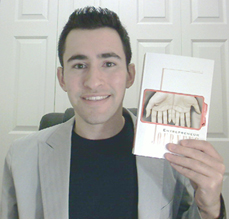
- First: learn the art of bootstrapping.
- Second: go with your passion. It is very, very difficult to put in the kind of work it takes into something that doesn’t consume you completely at a “heart” level, not just “brain” level.
- Three: Don’t be afraid of failures. Treat them as learning. Take risks in life. Not taking risks is the biggest risk. You stagnate.
- Four: Manage your time. Prioritize. Be intelligent about the trade-offs. You cannot have it all.
- Five: Have faith in yourself. You have no idea how powerful you are, until you start pushing and testing yourself. As you get to know yourself, you will be amazed with what you are capable of.
Good luck!
—–
Sramana Mitra has been an entrepreneur and a strategy consultant in Silicon Valley since 1994. As an entrepreneur CEO, Sramana founded 3 companies: Dais (Off-shore Software Services), Intarka (Sales Lead Generation and Qualification Software; VC: NEA) and Uuma (Online Personalized Store for selling clothes using Expert Systems software; VC: Redwood). Two of these were acquired, while the third received an acquisition offer from Ralph Lauren which the company did not accept. Sramana also writes a weekly column for Forbes and is currently authoring Entrepreneur Journeys, a series of books focused on demystifying entrepreneurship. Entrepreneur Journeys (Volume One) is now available from Amazon.com.